In contemporary commercial architecture, ceiling design serves as a critical element shaping customer perception and spatial experience. Mirror stainless steel has emerged as the premier choice for shopping mall ceiling applications, offering unparalleled aesthetic appeal combined with functional excellence. This comprehensive guide examines why leading developers and architects worldwide are specifying mirror stainless steel panels for high-traffic retail environments.
Transformative Visual Impact
The distinctive characteristic of mirror stainless steel lies in its highly polished surface that achieves 90%+ reflectivity. When applied to ceiling installations, this material creates immediate visual transformation through three primary mechanisms:
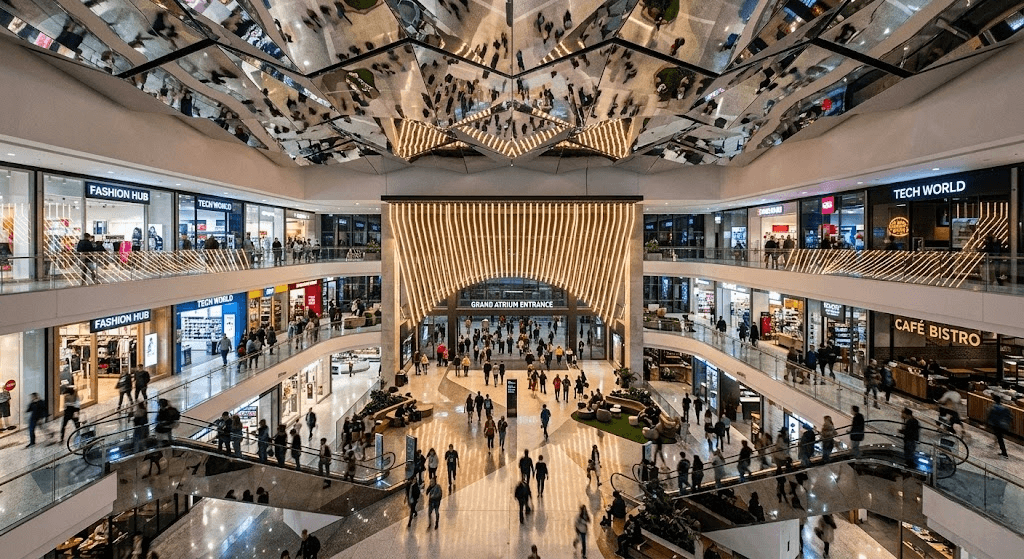
Spatial Expansion Effect Low ceiling heights present persistent challenges in urban retail developments. Mirror stainless steel addresses this constraint through optical illusion—the reflective surface virtually doubles perceived vertical space. Customers experience enhanced openness and comfort, directly correlating with extended dwell times and increased purchasing behavior.
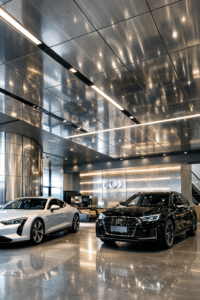
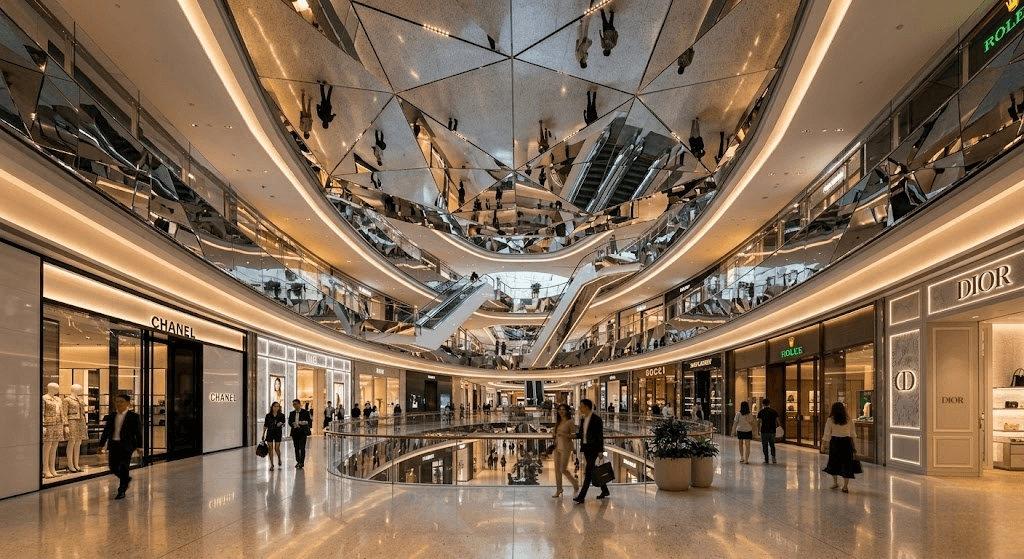
Luxury Atmosphere Creation The metallic luster communicates sophistication and contemporary design sensibility. For premium brand zones and flagship retail locations, mirror ceilings establish immediate quality associations. The interplay between reflected architectural elements and dynamic lighting produces immersive environments that differentiate competitive shopping destinations.
Dynamic Light Integration Unlike static decorative materials, mirror stainless steel actively participates in illumination design. Panels distribute artificial and natural light uniformly throughout circulation areas, eliminating harsh shadows and glare. Strategic placement near atriums and entrance zones maximizes daylight penetration, reducing energy consumption while maintaining visual comfort.
Operational Advantages for Commercial Properties
Beyond aesthetic considerations, mirror stainless steel delivers measurable performance benefits that justify investment across project lifecycles:
Exceptional Durability Grade 304 or 316 stainless steel resists corrosion, humidity, and temperature fluctuations inherent in climate-controlled retail environments. Panel integrity remains uncompromised for 20+ years, eliminating replacement cycles associated with conventional ceiling materials.
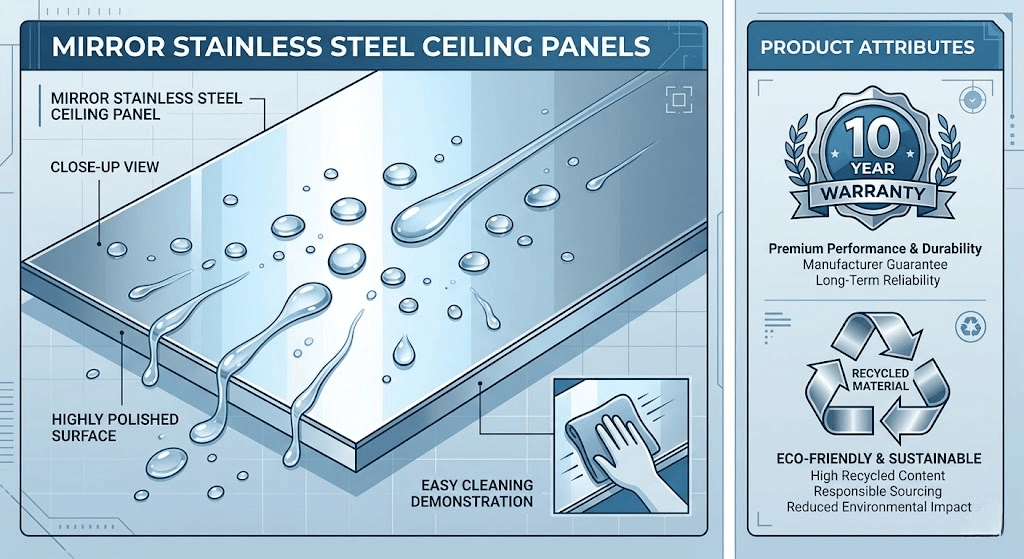
Minimal Maintenance Requirements The non-porous mirror surface prevents dust accumulation and staining. Routine cleaning requires only soft cloth and neutral detergent—no specialized treatments or protective coatings. Facility management teams report 60% reduction in ceiling maintenance expenditure compared to painted gypsum or acoustic tile alternatives.
Sustainability Certification Support Stainless steel contains 60-70% recycled content and maintains 100% recyclability at end-of-life. Projects pursuing LEED, BREEAM, or WELL certification gain material credit contributions. The reflective properties additionally support energy efficiency targets through optimized lighting design.
Design Flexibility Manufacturing capabilities accommodate custom dimensions, perforation patterns, and integrated services accommodation. Panels integrate seamlessly with HVAC diffusers, sprinkler systems, and acoustic treatments without compromising visual continuity.
Implementation Best Practices
Successful mirror stainless steel ceiling projects require attention to technical specifications:
| Parameter | Recommendation |
|---|---|
| Material Grade | 304 for standard environments; 316 for coastal/high-humidity locations |
| Panel Thickness | 0.8-1.2mm for rigid, flat appearance |
| Surface Finish | 8K mirror polish with protective film |
| Installation System | Suspended aluminum T-bar or custom framing |
| Lighting Coordination | Indirect cove lighting preferred; avoid direct point sources causing hotspot reflection |
Leading implementations combine mirror ceiling zones with matte or textured adjacent surfaces, creating visual hierarchy and preventing overwhelming reflectivity. Entrance atriums, escalator voids, and primary circulation spines represent highest-impact application locations.
Market Applications
Current deployment patterns indicate strong adoption across:
- Luxury department stores and flagship retail
- Airport retail concourses and duty-free zones
- Mixed-use development podium levels
- Entertainment and dining precincts
- Corporate lobby and amenity spaces
Case documentation demonstrates average 15-20% increase in customer foot traffic following mirror ceiling installation in main entrance zones, attributable to enhanced visual attraction and perceived interior quality.
Frequently Asked Questions
Q1: What is the typical lead time for mirror stainless steel ceiling panel orders?
Standard panel configurations ship within 15-20 working days following drawing approval. Custom perforation patterns, specialized dimensions, or large-volume contracts (exceeding 5,000 square meters) require 25-35 days production scheduling. Express manufacturing options available for time-sensitive retail opening schedules.
Q2: How does mirror stainless steel perform in fire safety regulations?
Stainless steel achieves Class A fire rating per ASTM E84 and EN 13501-1 standards. The material does not combust, emit toxic fumes, or contribute flame spread. Project-specific fire engineering assessments confirm compliance with local building codes including IBC, NFPA, and regional variations.
Q3: Can existing ceiling structures support mirror stainless steel panel weight?
Panel dead load ranges 8-12 kg/m² depending on thickness—comparable to standard suspended ceiling systems. Structural engineers should verify original building capacity; most commercial structures accommodate installation without reinforcement. Lightweight aluminum composite alternatives available for constraint applications.
Q4: What warranty coverage applies to mirror finish quality?
Manufacturers typically provide 10-year warranty against corrosion, delamination, or reflective degradation under normal interior conditions. Protective film removal timing and cleaning protocol adherence affect warranty validity. Extended coverage options available through certified installation contractor networks.
Q5: How do mirror ceilings impact acoustic performance in open retail environments?
Untreated mirror panels reflect sound energy, potentially elevating ambient noise levels. Acoustic optimization strategies include: perforated panel configurations with backing insulation, strategic placement of sound-absorbing baffles in non-visible zones, and hybrid designs combining mirror feature areas with acoustic ceiling treatments. Acoustic modeling services recommended for projects exceeding 70dB ambient noise targets.
Ready to elevate your shopping mall project? Contact our technical sales team for specification support, sample requests, and competitive quotation.